
The simplest great sauce in the world
Compare chimichurri with another classic meat sauce: béarnaise. To make béarnaise, you need to make a reduction of tarragon, shallots and vinegar, then build up an emulsion with egg yolks and clarified butter, at exactly the right temperature, whilst whisking constantly. Too hot and it curdles. Too cold and it won’t thicken. It’s a sauce that requires technique, timing, experience and your full attention.
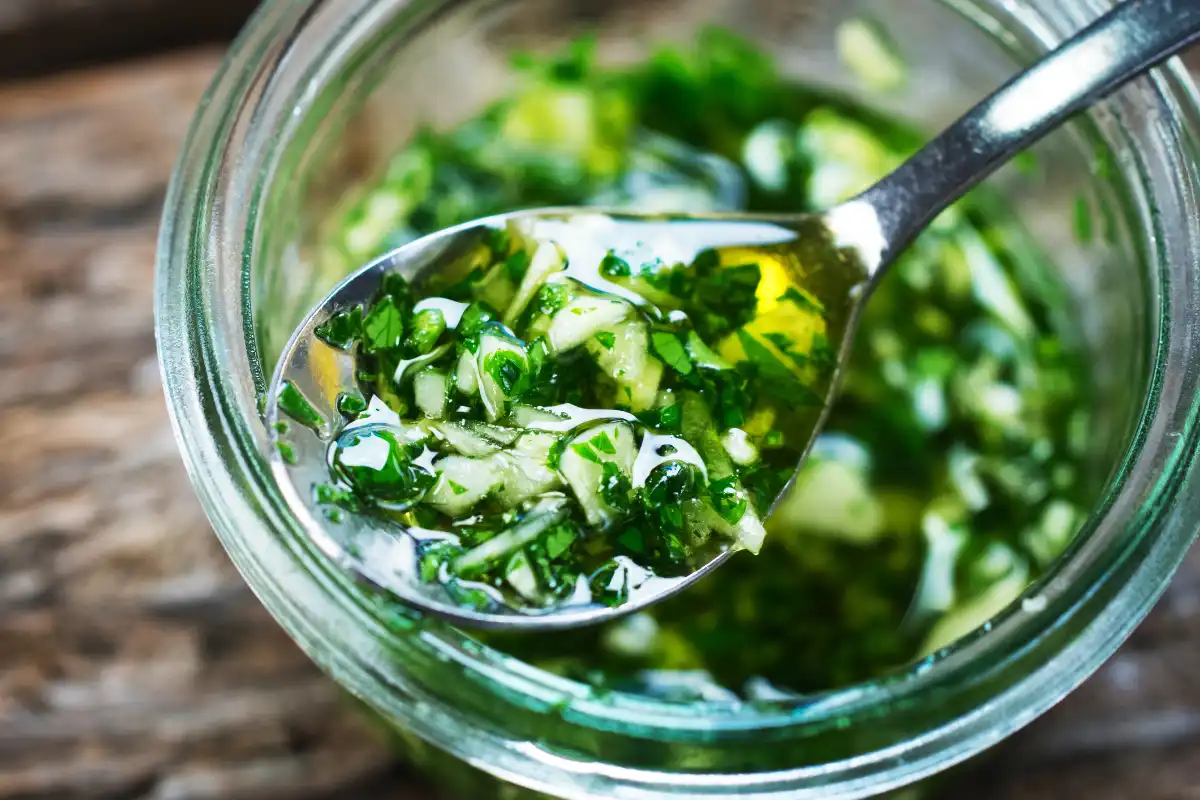
Chimichurri is the exact opposite. You chop herbs, crush garlic, pour in vinegar and oil, give it a stir, and you’re done. No pan, no heat, no emulsion, no risk. A child could do it. And yet this sauce features on the menus of top restaurants worldwide, alongside sauces that take ten times as much effort.
That is the first lesson of chimichurri: complexity of flavour has nothing to do with complexity of preparation. The sauce proves that with a handful of fresh ingredients, without any cooking technique, you can achieve a result that rivals the most refined French sauces.

A raw sauce, and why that matters
Chimichurri is entirely raw. Nothing is heated, nothing is reduced, nothing is thickened. That is not only easy, it has a direct impact on the flavour. Fresh parsley that you chop finely retains all its volatile aromatic compounds. Raw garlic has a sharpness and depth that cooked garlic completely loses. Red wine vinegar provides an undiluted acidity that would evaporate in a cooked sauce.
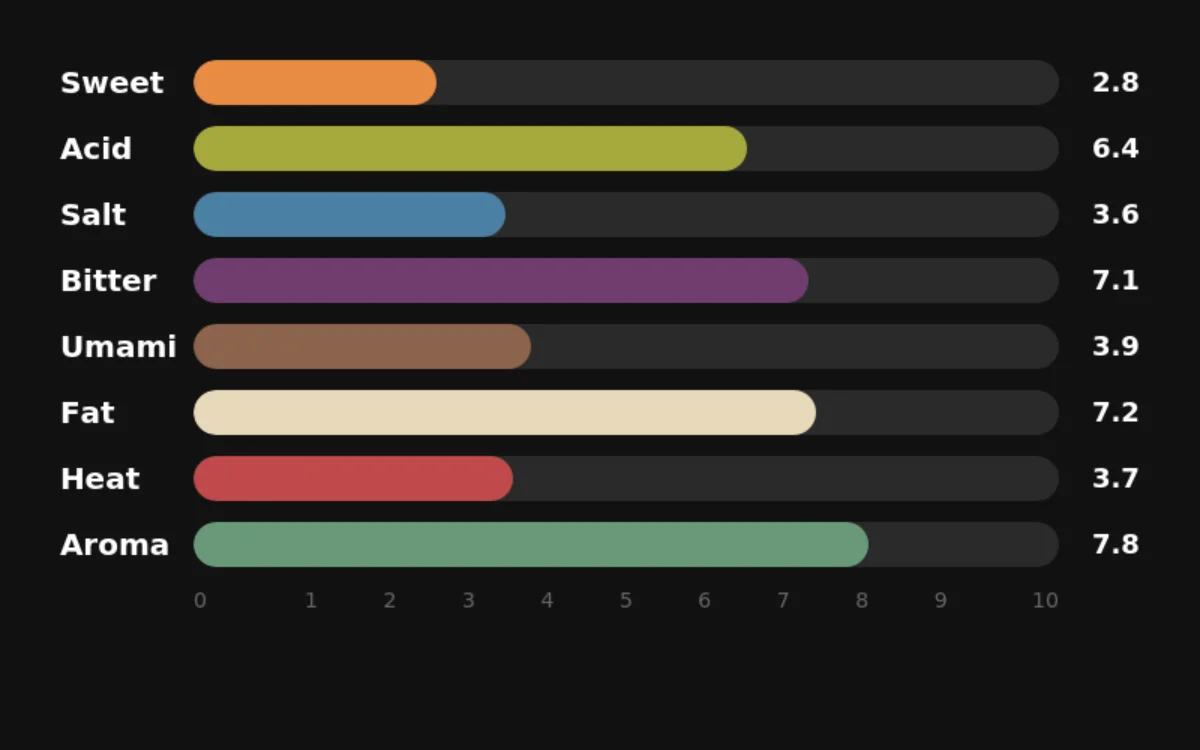
The result is a flavour profile with a clarity that cooked sauces rarely achieve. You can see this reflected in the kuumuu flavour profile: aroma scores 7.8, the highest dimension. This is a direct result of the fact that no ingredient is heated. Heat breaks down flavour compounds. Chimichurri preserves them all.
The secret of the flavour: complementary contrast
Three dimensions stand out: aroma (7.8), fat (7.2) and bitterness (7.1). Behind these lies a robust acidity (6.4). This is no coincidence. That balance is precisely why chimichurri works so well with grilled meat.
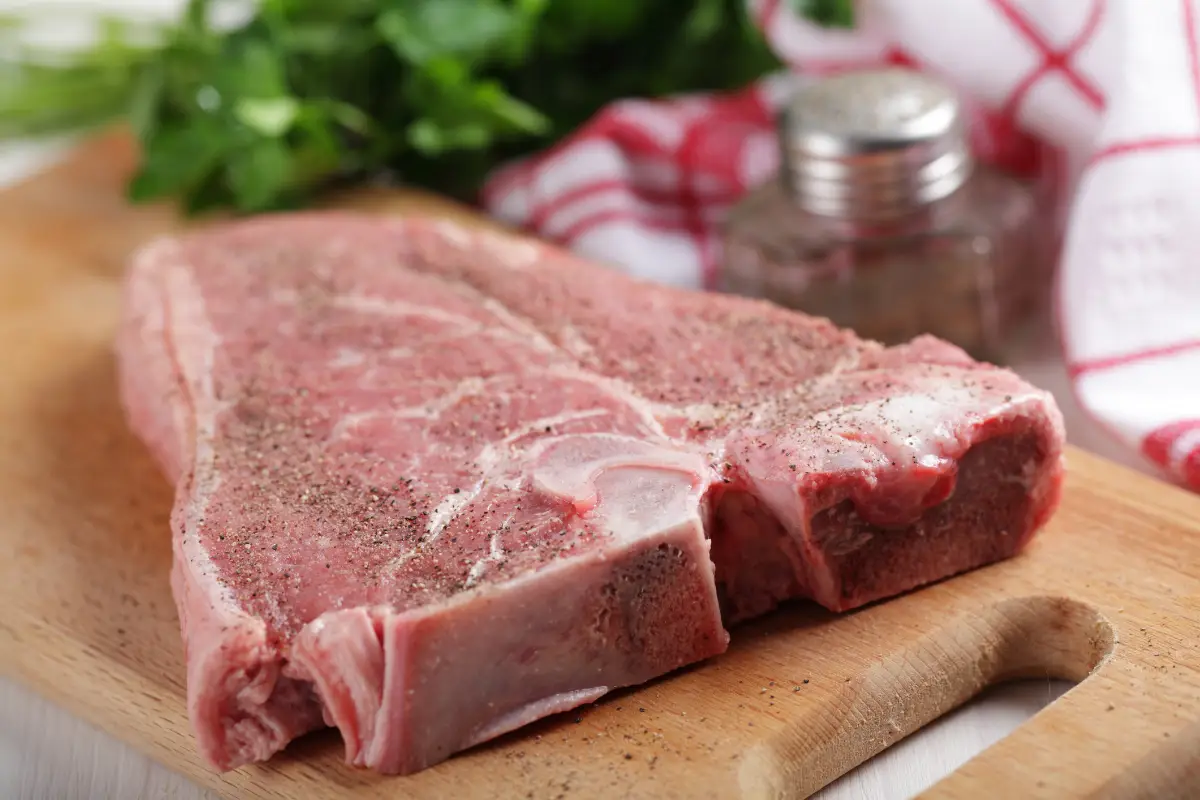
A perfectly grilled steak has plenty of umami, plenty of fat and plenty of sweetness from the Maillard reaction. What’s missing? Freshness, acidity, bitterness, clarity. Chimichurri provides precisely those missing dimensions. The vinegar cuts through the fat of the meat. The bitter herbs provide contrast to the sweetness of the crust. The intense aroma fills the gaps left by the meat.
This is the fundamental principle every chef should understand: a good sauce complements what the main ingredient lacks. Not repeating, but complementing. Chimichurri is the textbook example of that principle.
Why the world has embraced chimichurri
In Argentina and Uruguay, chimichurri is always present. Every asado has a bowl of chimichurri on the table. But over the past twenty years, the sauce has spread from South America across the globe. You can now find it on menus from New York to Amsterdam, from Sydney to Berlin.
There are three reasons for this. Firstly, the rise of barbecue culture outside the United States. When European and Asian chefs began to explore grilling cultures worldwide, they discovered the Argentine asado and, inevitably, chimichurri too. Secondly, the shift towards fresh, unprocessed flavours. At a time when chefs are placing ever greater value on freshness and honest ingredients, chimichurri fits the bill perfectly. No E numbers, no binding agents, no gimmicks. Thirdly, its versatility. Chimichurri isn’t limited to beef. It works on virtually anything that comes off the grill.

Five lessons every chef can learn from chimichurri
The first lesson: flavour complexity does not arise from complex techniques, but from the right combination of ingredients. Without any processing, the ingredients deliver a profile that touches on eight dimensions of flavour.
The second lesson: a sauce doesn’t need to thicken to work. Chimichurri is loose, almost liquid. It clings to the meat not through texture, but through flavour. The oil carries the aromas, the vinegar clings to the surface. That is enough.
The third lesson: think in terms of contrasts, not harmonies. The best combinations arise when a sauce provides what the main ingredient lacks. Fatty meat calls for acidity. A sweet crust calls for bitterness. Deep umami calls for freshness. Chimichurri delivers it all.
The fourth lesson: time is an ingredient. Chimichurri you’ve just made tastes good. Chimichurri that’s spent a night in the fridge tastes better. The flavours meld together, the garlic becomes milder, the whole becomes more rounded. Patience perfects the sauce.
The fifth lesson: let the ingredients do the work. Chimichurri consists of fresh parsley, oregano, garlic, red wine vinegar, olive oil, chilli flakes and salt. Every ingredient is recognisable in the final result. There is nothing to mask or smooth out the individual flavours. In the best dishes, you can taste every ingredient.
Where chimichurri is at its best
The classic pairing is grilled beef: entrecôte, picanha, flank steak, bavette. But chimichurri goes far beyond that. The sauce works excellently on grilled chicken thighs; the acidity and herbs elevate the milder chicken to another level. On lamb chops, chimichurri provides the freshness that the richer lamb meat needs. Over grilled vegetables (courgette, pepper, aubergine), it acts as a dressing that enhances the grilled flavour rather than masking it.
Less obvious but just as good: chimichurri on fried fish (sea bass, sea bream), on toasted bread with coarse sea salt, or as a finishing touch to a stew that’s threatening to become a bit too heavy. Wherever a dish has richness, heaviness or sweetness and lacks freshness, chimichurri is the solution.