The core temperature is the temperature at the coldest point of the product: the middle of the thickest part. During cooking, heat is always transferred from the outside to the inside. This creates a temperature gradient: the outside is hottest, the core lags behind.
With a thin product, this gradient is small and the core heats up quickly. With a thick piece of meat, such as a tomahawk or thick côte de bœuf, the temperature difference between outside and core can be considerable. This is precisely why the colour or texture of the outside says little about the actual cooking of the core.
Correct measurement of core temperature is therefore not a detail, but the only reliable way to check cooking, juiciness and food safety.
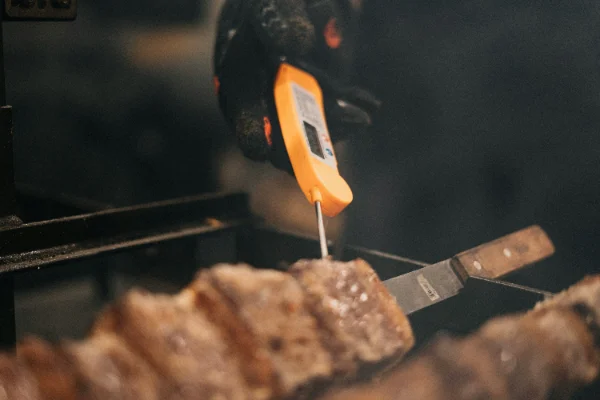
Measuring correctly: precision work
A core thermometer is only as reliable as the way it is used. In advanced grilling, measuring is all about finding the coldest point, not a quick indication.
Important points to note:
Preferably measure away from direct heat, so remove the product briefly from the grill for a stable measurement.
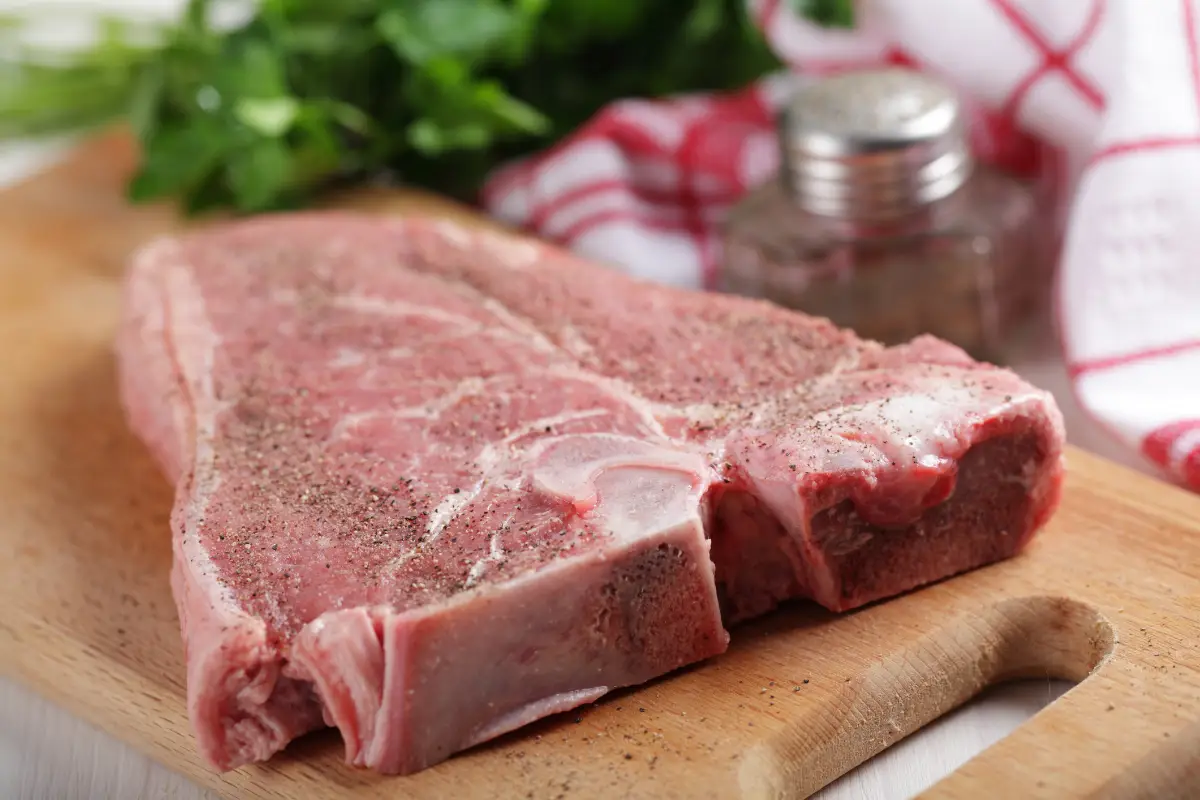
For steaks, insert the thermometer horizontally from the side into the meat, towards the geometric centre.
Avoid contact with bone. Bone conducts heat more efficiently than muscle tissue and can distort the measurement by a few degrees.
Do not measure in layers of fat. Fat heats up more slowly than muscle tissue and may actually give too low a value.
If possible, measure in several places to confirm that you actually hit the coldest point.
Clean the thermometer between measurements to avoid cross-contamination, especially with raw poultry or pork.
For very thick cuts of meat, a leave-in thermometer can provide additional insight into the course of temperature rise during cooking.
Time is no measure
Preparation time is a derivative, not a control. Two pieces of meat of the same weight can cook completely differently due to differences in
thickness
initial temperature
fat and connective tissue content
grilling method used (direct, indirect, combination)
When grilling indirectly at low temperature, the core heats up slowly and evenly. Direct grilling at high heat creates a large temperature gradient, which affects juiciness, crust forming and post cooking.
For advanced BBQ'ers, the core thermometer is not a tool, but an instrument.
Cooking and food safety: microbiology in practice
The desired cooking is a combination of flavour, texture and safety. That safety is determined by the presence and breakdown of microorganisms.
Whole pieces of meat
In intact muscle tissue, bacteria are almost exclusively on the surface. During grilling, this surface is rapidly heated to temperatures where bacteria die. As a result, beef in one piece - if fresh and hygienically processed - can safely be eaten pink or even raw.
Minced meat
With minced meat, this fundamentally changes. Grinding spreads bacteria from the surface throughout the product. For this reason, a burger must be cooked through completely: the core must receive the same heat as the outside to be safe.
Pork and poultry
Pork and especially poultry are more likely to harbour harmful bacteria. Therefore, stricter temperature limits apply here.
For poultry, a minimum core temperature of 74 °C applies. This is not arbitrary: at this temperature, the bacterial load is reduced to such an extent that the product can be eaten safely. Even the darker meat in legs and thighs is then fully cooked.
Where do you measure the core temperature in poultry?
Correctly measuring poultry requires extra attention because of bones and uneven thicknesses:
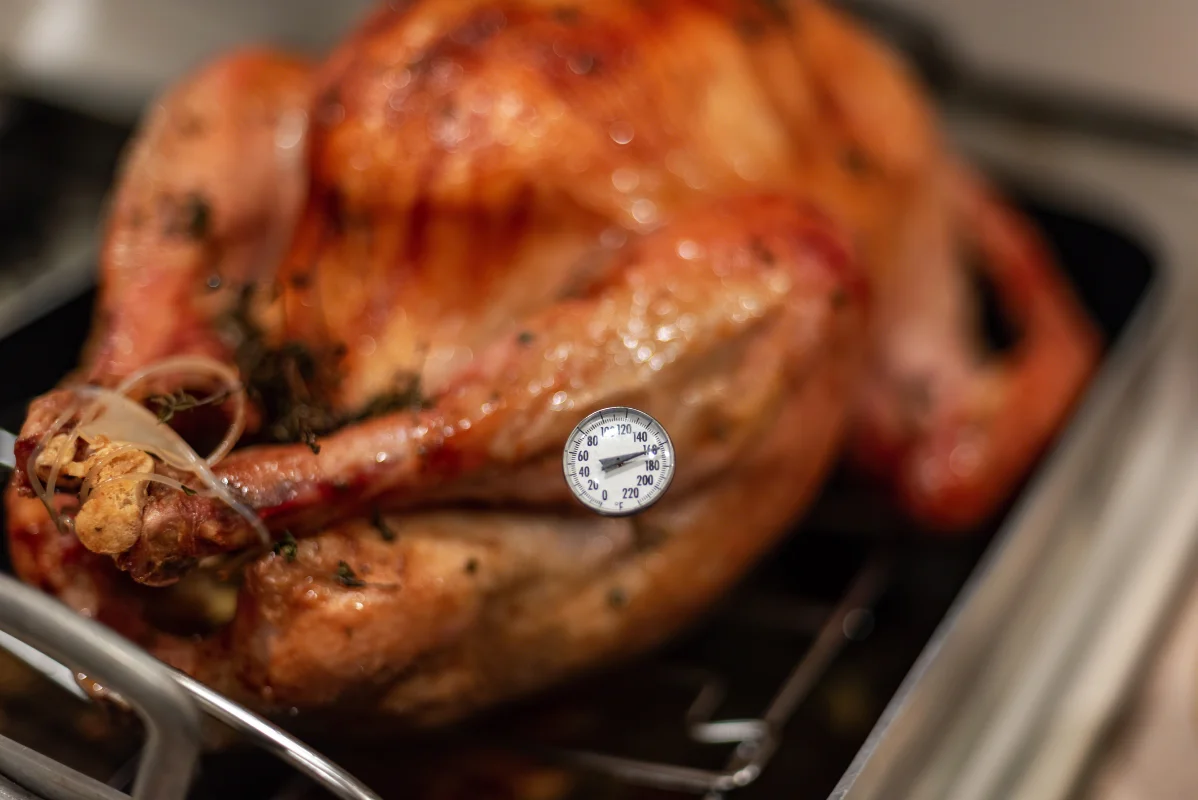
Whole chicken, turkey or other poultry: in the fold between breast and leg, without touching bone
Drumstick: in the thickest part, away from the bone
Roast: exactly in the geometric middle
Fillet: in the middle of the thickest part
Preferably measure in several places; especially in large birds, breast and legs can have different rates of heating.
Fish: different structure, different logic
Fish is fundamentally different from meat. Muscle structure is finer, connective tissue is minimal and proteins solidify at lower temperatures.
A safe core temperature of around 60 °C applies to most fish. At this temperature, the fish is cooked and safe to eat. Some fish are traditionally cooked lower, but this requires very fresh fish and precise temperature control.
With fish, overcooking is often a greater risk than undercooking.
Re-cooking: residual heat and temperature gradient
Cooking does not stop as soon as the meat comes off the grill. Due to the higher temperature of the outer layers, heat continues to move to the core. This process is called carry-over cooking.
The degree of carry-over cooking depends on:
the temperature of the outside
the thickness of the product
the selected grilling method
the resting time
With direct high-temperature grilling, the core temperature can rise 3 to 5 degrees after grilling. It is therefore wise to remove meat from the grid when it is a few degrees below the desired final temperature.
While resting, the temperature gradient evens out, which affects not only the cooking but also the distribution of juices in the meat.
If the core temperature is still too low after resting, the meat can always be returned to the grill briefly. However, a cooked through is irreversible.