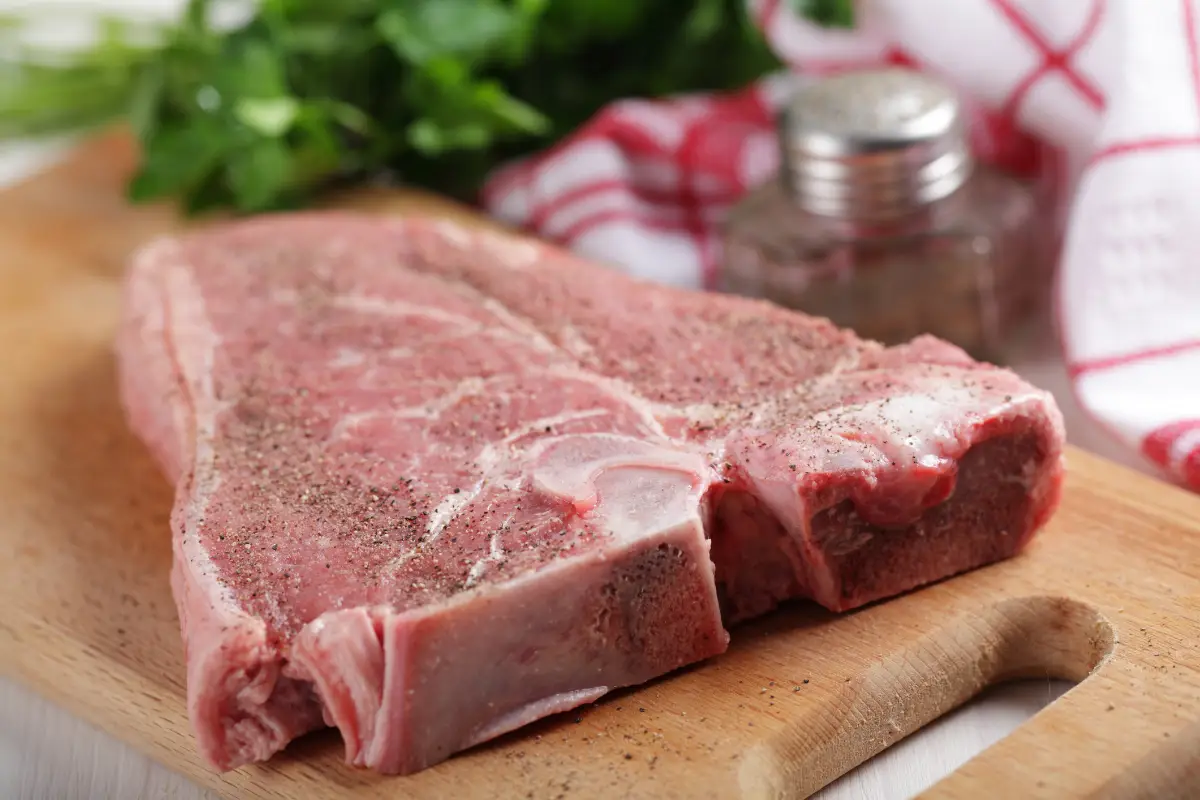

To start, choose the reverse sear method: first pre-cook with moderate, indirect heat, then finish grilling at high temperature directly over the coals. Keep the temperature in the BBQ at about 120 degrees during indirect cooking. For a subtle smoke aroma, place a small block of smoking wood on the coals. Oak or beech are both fine. Don't overdo it: smoke should support, not dominate.
Do not let the meat come to room temperature first. The T-bone goes cold from the refrigerator onto the grill. A cold surface absorbs smoke better and also the meat heats up more controlled during the indirect phase. Rub the meat firmly with some coarse sea salt.
And then the trick: put something that insulates under the part of tenderloin. Aluminum foil doesn't work; it actually conducts heat. You can use a thin slice of potato or celeriac, for example. Because of the high moisture content and low thermal conductivity, this acts as a thermal buffer. Thus, the tenderloin cooks less quickly than the sirloin steak, which is exactly what you want to achieve.
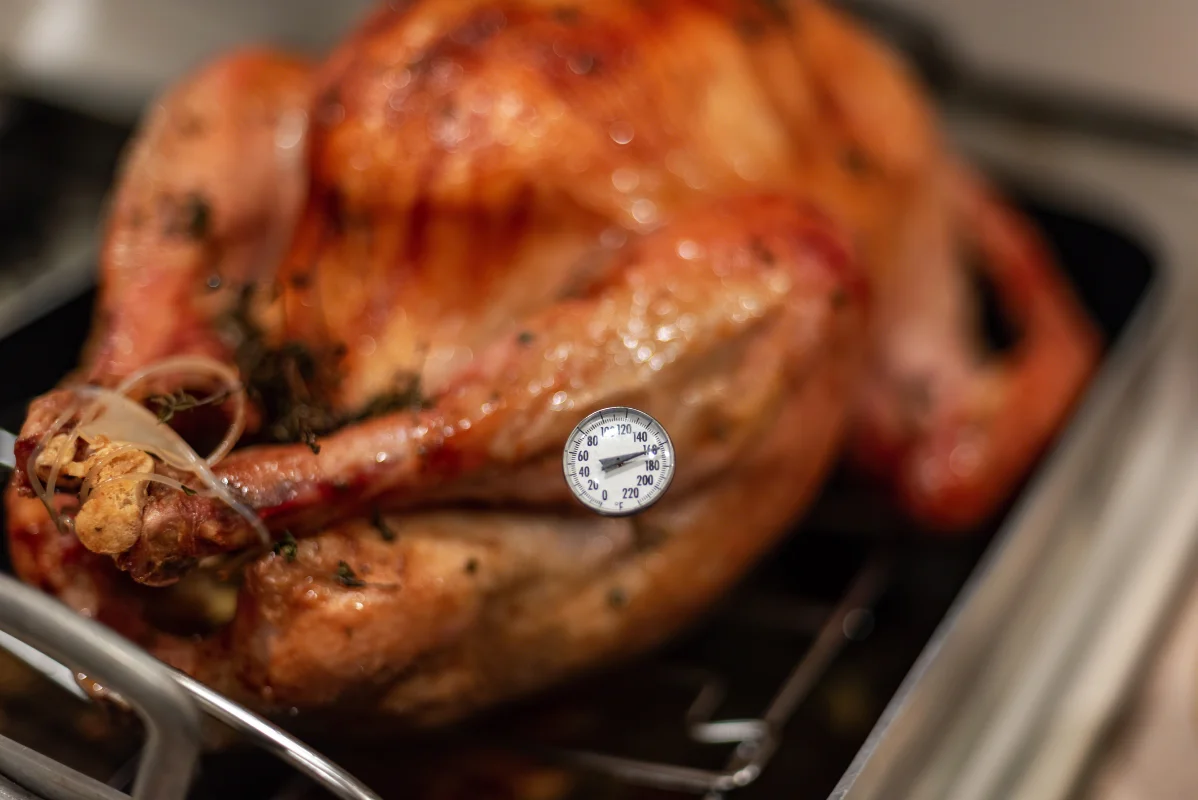
Let the T-bone cook gently indirectly and measure both sides separately. When the core temperature of the sirloin has reached 45 degrees, the core temperature in the tenderloin should be a few degrees lower. Actually check that; if the difference is not there, adjust the insulation slightly.
Convert the BBQ for direct grilling. Let the temperature rise to about 250 degrees and, if you have one, place a cast iron grate to grill the T-bone off. Do not close the lid or hood of the BBQ again when grilling off. You just want to sear the meat and let the core temperature rise a few degrees in a controlled manner. In a closed BBQ, this goes way too fast and the meat cooks too far.
For a nice grill window, turn the meat a quarter turn after half a minute. Another half a minute later you turn the meat over and half a minute after that you turn it another quarter turn. The grill window does little for the flavor, but it does look very professional. Moreover, it is much easier to create a grill window on a cast iron grill than on stainless steel. Cast iron simply conducts heat better.
Remove the T-bone from the BBQ as soon as the core temperature of the tenderloin reaches 50 degrees. If all goes well, the core temperature of the tenderloin should already be a few degrees higher, towards 54-55 degrees. Let the meat rest for 3 to 5 minutes under a loose piece of foil. While resting, the core temperature will rise slightly due to post-cooking; you have calculated that exactly.
I always cut the meat off the bone on both sides before serving. Then I make nice slices of it, about an inch thick. Perpendicular to the grain of the meat, of course, always. That wire runs parallel to the leg of the T-bone. Put the sliced meat back around the bone. Thanks to the reverse sear method, you have a beautiful crust while the cooking inside is nice and even.
In the perfect T-bone steak, both the tenderloin and sirloin are at just the right core temperature. This is one way to get that done - without guessing, but with measuring and a little smart thinking. And since such a T-bone is big enough for two diners, you get to fight it out with each other who gets the most of which part. My advice: share fairly. They are both equally delicious.